Free Choice/ originally written in English / C21ST / Europe / England
“The enthusiasm that most obviously animates Kumukanda is music, specifically garage, grime and hip-hop. Chingonyi thrillingly integrates their rhythms and rhymes… in a collection that tackles race, identity, masculinity, migration, bereavement and longing.”
Nicolas Wroe, writing in The Guardian, 2018
Introduction
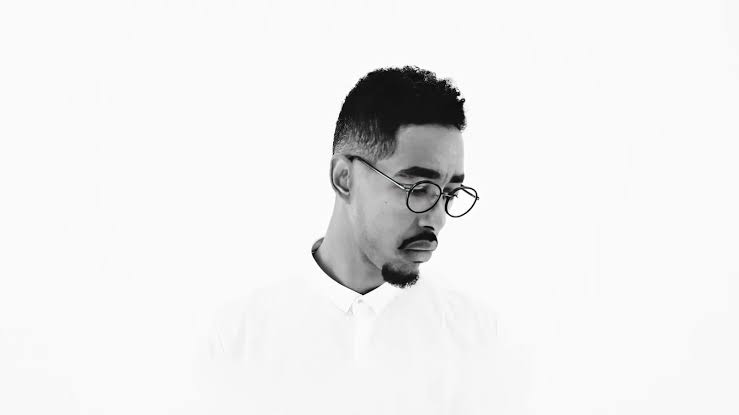
Kayo Chingonyi’s first published poetry collection is called Kumukanda, a word from Luvale, his father’s first language from the country of Zambia where Kayo was born. Meaning ‘initiation’, it’s the name given to the rituals that mark the passage into adulthood of Luvale, Chokwe, Luchazi and Mbunda boys, from Zambia. As part of these rites, the boys live away from their homes in the bush, where they are taught traditional skills, learn the history of their tribes, and receive wisdom that takes them into manhood. A special day, makishi, marks the return of the initiated as men, and a celebratory festival is held. In an author’s note, the writer explains that this poetry collection “approximates such rites of passage in the absence of my original culture.”
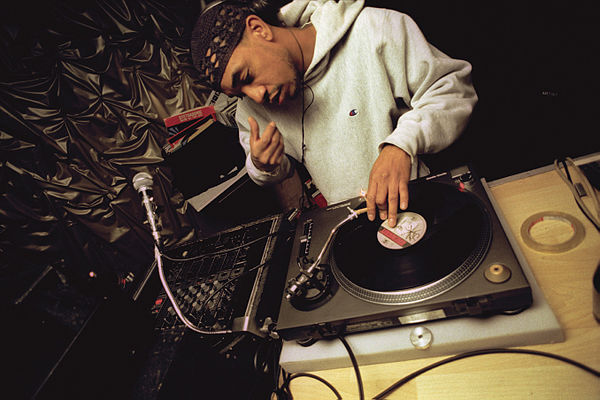
It’s this process that forms the heart of kumukanda, the name of both this poetry collection and its central poem, the one that Kayo says he found most difficult to write. Following the death of his father when he was six years old, Kayo’s mother – who was studying in the UK – came to fetch him to live with her. As a result of disagreements following his father’s passing, Kayo became disconnected from his Luvale family, not speaking to anybody from his father’s side since 1993. Instead, he embraced aspects of British culture, especially Black British music culture such as grime and rap music, to negotiate his own rite of passage from boy to man.
Before and after its title poem, the book deals powerfully with Kayo’s growing up black in the UK, racist encounters, finding a community, assimilation, love of music, and the loss of his parents. In Self-Portrait as a Garage Emcee he remembers hours spent making mixtapes by recording songs from the radio onto cheap cassettes. The magic of music transforms him, saving him from loneliness and protecting him from schoolyard bullies. In later poems, we follow Kayo as he enters drama school, auditioning for his first professional parts, and learning to be a man. He experiences the grief of his mother’s passing away, and learns How To Cry in a poem that explores an alternative notion of masculinity for young Black British men.
IB Student Learner Profile: Communicators
We express ourselves confidently and creatively in more than one language and in many ways. We collaborate effectively, listening carefully to the perspectives of other individuals and groups.
There’s no doubt that Kayo Chingonyi is a masterful communicator, whether using the written or spoken word. He takes an auditory approach to writing poems, hearing them in his head as if spoken aloud, and writing them with performance in mind (something he elaborates on in this interview with Maya Caspari). He says that “music and poetry are wrapped up in each other” and samples lines, rhymes, and lyrics from grime and rap artists in his work. Reserved in person, he comes alive when reading his poetry. Thankfully, his magnetic performances are readily available to watch on Youtube and elsewhere.
IB Lang and Lit Concept: Identity
A central theme of Kumukanda is an exploration of how identity is formed when one is distant from one’s family, ancestral home, or culture. In a note written about the collection’s title poem, Kayo Chingonyi writes: “I exist in the world as someone who both is and is not British. To be both British and Zambian is to be neither one or the other. It is a hybrid way of being that means I can’t be accepted by either ‘side’. In the space of the poem, though, I can be both. I can write in English about my Luvale heritage.” In several poems, Chingonyi considers conflicts of identity; remembering playing cricket at school he thinks about how “some words in this argot catch in the throat, seemingly made for someone else“.
1. Self-Portrait as a Garage Emcee
“Remember the days before your Walkman was banished to a life in the attic?”
Set over the course of several years, Self-Portrait as a Garage Emcee tells how the writer embraced music culture as a way of getting through his lonely childhood. Having come to England following the death of his father in Zambia when he was six years old, the poem begins as Kayo and his mother once again need to move; from London to Harold Hill, a satellite commuter town in Essex.
Kayo wakes up in their new house still haunted by the presence of its former occupant, an old lady who recently passed away. Twice separated from all he finds familiar, the boy Kayo seeks solace in music, dialling through radio frequencies and stealing his mother’s old cassette tapes, recording songs to play over and over again on his Walkman. Then, one day, he finds a mysterious black tape, unmarked, from which emanates a voice he thought he’d never hear again…
Resources
Learner Portfolio: the story of the poetry collection
Meaning ‘initiation’, Kumukanda is the story of Kayo Chingonyi’s rite of passage from child to manhood. The collection as a whole follows the coming of age structure common to many narratives called ‘bildungsroman’, a German word meaning ‘novel of education’ or ‘novel of formation’. Research the structure and features of a classic bildungsroman (or coming of age story), then apply the poems in Kumukanda to this template. To what extent does the collection follow a classic coming of age story structure? To demonstrate your understanding, you could draw a poster or diagram of Kumukanda as a bildungsroman.
Kayo’s Music

2. The Music of Poetry
“Throw yourself into the thick… Your folded arms understand music.”
After the tour-de-force Self-Portrait as a Garage Emcee, Kayo presents a series of smaller poems that explore connected issues of music, music culture, belonging, and community. Broomhall, set in a small town in the north of England, recounts how he would visit the only shop that sells products imported from Africa, transporting him back to the Zambian markets, with all their hustle, bustle, and bartering. When boys in the shop mock him with an Arabic name, he reflects how, out of Africa, he’ll always be seen by the colour of his skin first. Winter Song, The Room, and Some Bright Elegance all, to a greater or lesser degree, invoke the book’s driving force: music and music culture. In loosely connected scenes we see Kayo with a group of friends waiting outside a friend’s house for him to deliver a newly recorded tape; we hear the crackle and hiss of amateur recordings that make each tape unique; and we go back to the music halls and nightclubs of London where, joined in the anticipation of a dropping beat, crowds move as one in the joy and abandon of the dance.
Resources
Wider Reading
Kayo’s Music
Learner Portfolio: Spotify Wrapped
At the end of each year, Spotify summarises your top artists, songs, listening history, and global ranking as a way of tracking your engagement with music and musical genres. Using the information scattered throughout the poems in Kumukanda, create a Spotify Wrapped for Kayo Chingonyi. Annotate your Wrapped with notes as to the importance of music in the collection (or present your design with an oral explanation reflecting on the ‘power of music’ in Kumukanda).
3. Exposing the post-race lie
“Pitched from a transit van’s rolled down window; my shadow on this unlit road…”
calling a spade a spade is a collection of nine interlocking poems spoken as a direct address to ‘the N word’, an experimental device which puts the writer’s skin colour front and center. Each poem is a tiny tableau featuring an act of hurt or dehumanisation; read in sequence the micro-aggressions accumulate into a picture of a society struggling with issues of structural and institutional racism. For example, In The N Word, Kayo relates his own history with this offensive term and wonders how, even though it has been removed from polite conversation, it still seems to follow him around, poised on the lips of friends of friends who seem unaware of its loaded history. In more than one of these poems, it rears its ugly head in a canonical piece of literature he’s been asked to study (a play by Pinter, a poem by Lowell). Tutors tiptoe around the word, but Kayo can’t help but feel how celebrated authors saw the world in terms of ‘us and them’. In The Conservatoire System he agonises over the visibility of black actors, who (contrary to the idea that actors can be everyone and no-one) must be hyper-black if they are to be seen at all. Each poem is another snapshot of racism’s legacy in supposedly progressive and liberal spaces: schools, colleges, universities.
Ultimately, calling a spade a spade dismantles the idea of British exceptionalism when it comes to racism. It’s easy to point the finger across the Atlantic and declare that America has the real racism issue – but Kayo’s lived experience puts paid to the idea that Britain is a post-racial society by exposing acts of racism, little and large, that dictate the terms of his educational experiences and boundaries of his personal and professional life.
Resources
Wider Reading
Kayo’s Music
Learner Portfolio: Racism In Its Many Guises…
calling a spade a spade begins with the idea that, while racism may change its clothes and even its language, it hasn’t gone away. After studying, discussing and researching around the poems in this section create a Learner Portfolio entry on the theme of racism in Kumukanda. You could mind-map, write a mini-essay, make a chart, or write a reflective response to extend and explore your understanding of how this theme develops across the poems in the collection.
4. Poems of Bereavement
“I’m going to fold, as an overloaded trestle folds, in the middle of Romford Market and bawl…”
In an interview with Nicholas Wroe (for the Guardian after the publication of Kumukanda) Kayo admitted: “the death of parents is something that makes people grow up sooner than they otherwise would expect.” These poems are part of a moving sequence in the second half of the collection that deal with bereavement, grief, and coping with loss. They are autobiographical in that they concern the deaths of Kayo’s father (when he was six, the event that catalysed his move from Zambia to London) and mother when he was thirteen years old.
How To Cry recalls the process of healing after a bereavement. Although, as time passed, Kayo felt as if he knew how to process his loss, suddenly, in the middle of a bustling market street, an intense feeling of grief strikes unexpectedly. In Alternate Take, Kayo thinks all the way back to images of his father’s funeral and how he has carried the consolations of the day (“I am sorry for your grieving/your trouble/your loss”) with him all these years. A Proud Blemish takes readers through his mum’s battle with cancer, and his difficulty in letting her go. And Orphan Song beautifully reimagines death not as the end of life, but as a waystation on a journey into the unknown.
Resources
Wider Reading
Kayo’s Music

Learner Portfolio: Practise for Paper 2
Write this Learner Portfolio in the style of a practice Paper 2 response. You can use one of the prompts below, or another prompt given to you by your teacher. Although Paper 2 requires you to compare-and-contrast two literary works, for the sake of this exercise you could focus only on your response to Kumukanda. Choose one of the following prompts, talk with your teacher about how to approach and structure your writing, then complete your portfolio entry (visit this post for more help with Paper 2):
- How do writers you have studied use language to create tense or unforgettable moments?
- Discuss how isolation or loneliness is presented in two works of literature you have studied.
- Characters can have an ‘inner’ life and a ‘public’ life. To what extent is this true of characters in two literary works you have studied?
- Consider the use to which music and/or musical elements have been made in two works of literature you have studied.
5. Poems of Identity
“I was raised in a strange land, by small increments…”
TBC
Resources
- Poems of Identity Discussion and Activities
Wider Reading
Kayo’s Music
Learner Portfolio: Practise for Paper 1 (Literature students only)
If you are a Language A: Literature student, at the end of your course you will sit Paper 1: Guided Literary Analysis. This paper contains two previously unseen literary passages. SL students write a guided analysis of one of these passages; HL students write about both passages. The passages could be taken from any of four literary forms: prose, poetry, drama or literary non-fiction. Each of the passages will be from a different literary form. For more help with Paper 1, visit the 20/20 page and find the literary form you would like to study.
Here is a small pack of resources using Kumukanda to help you work on your Paper 1 textual analysis skills. The pack contains three passages from the poetry collection, and one sample answer for you to read and discuss. No answer is perfect, so you might find ways you could improve or change this sample. All the passages are accompanied by a guiding question, so you can practice for yourself by choosing a different passage and completing this Learner Portfolio entry in the style of Paper 1: Guided Literary Analysis.
Towards Assessment: Individual Oral
Supported by an extract from one non-literary text and one from a literary work (or two literary works if you are following the Literature-only course)students will offer a prepared response of 10 minutes, followed by 5 minutes of questions by the teacher, to the following prompt: Examine the ways in which the global issue of your choice is presented through the content and form of two of the texts that you have studied. (40 marks)
Kumukanda could be a perfect text to choose when planning for your Individual Oral talk. The collection contains so many themes that can be explored as Fields of Inquiry such as identity, community, racism, prejudice and stereotyping, how to cope with loss, alternative masculinities, and more, and more. Once you have finished reading and studying these poems, spend a lesson working with the IB Fields of Inquiry: mind-map the poems, come up with ideas for Global Issues, make connections with other Literary Works or Body of Works that you have studied on your course. See if you can make a proposal you might use to write your Individual Oral. Here are one or two suggestions to get you started, but consider your own programme of study before you make any firm decisions about your own Global Issue that you want to talk about. Whatever you choose, remember a Global Issue must have local relevance, wide impact and be trans-national:
Literary pairing
Body of work Pairing
- Field of Inquiry: Beliefs, Values and Education
- Global Issue: the conflict between individual desire and social expectation
- Rationale:
In his poems, Chingonyi reveals the pressure to embody socially prescribed forms of masculinity, even as he yearns to define himself on his own terms. He’s constantly caught between who he wants to be and who others expect him to be, pigeonholed by his skin colour and forced to act a persona that’s not really him. A work in translation that deals with a similar conflict is Haruki Murakami’s The Elephant Vanishes. His protagonists desire autonomy, escape, or emotional connection but are constrained by the norms of modern Japanese society. Whether it’s dropping out of the rat race, a sudden urge to do something spontaneous, or pursuing an unlikely obsession, the stories show how individuals try to resist expectations – and the consequences for those who go against the grain. An alternative pairing for a Global Issue like this that would be just as effective is The Vegetarian by Han Kang.
- Field of Inquiry: Art, Imagination and Creativity
- Global Issue: access to restricted cultural spaces
- Rationale:
Throughout Kumukanda, Chingonyi reflects on his experiences penetrating educational spaces from which he felt partially excluded as a Black boy studying drama and literature in Britain. His poems reveal how persistent institutional barriers work to exclude people from spaces that are historically white-only. A body of work that engages in a similar act of rebellion is Mr Brainwash’s pop-art, that challenges the exclusivity of the traditional art world through mash-ups of ‘high art’ and popular culture. Additionally, his origins as a street artist opened his work up for everyday people, drawing attention to the way art is often subject to gatekeeping, access allowed only for the privileged few.
Towards Assessment: Higher Level Essay
Students submit an essay on one non-literary text or a collection of non-literary texts by one same author, or a literary text or work studied during the course. The essay must be 1,200-1,500 words in length. (20 marks).
Once you’ve finished studying Kumukanda, and if you are an HL student, you might consider using this text to write your HL Essay. Here are one or two examples of lines of inquiry suitable for this text – but remember to follow your own interests and the direction of your own class discussion to generate your own line of inquiry. It is not appropriate for students to submit responses to an essay question that has been assigned:
- How does Kayo Chingonyi use musical motifs and allusions to convey the role music plays in affirming identity his collection Kumukanda?
- How does Kayo Chingonyi explore use language to expose structural racism in his collection Kumukanda?
Wider Reading
Categories:Poetry
 IB Language and Literature 3.0