FRom the pRL / translated work (albanian) / C20TH / Europe / albania
From the outset of his career as a novelist, Kadare’s interest has fastened on the distinct, cruel traditions of the Balkans, where nobody forgets anything and revenge is eternal.
Julian Evans, Living with Ghosts: an interview with Ismail Kadare
Introduction
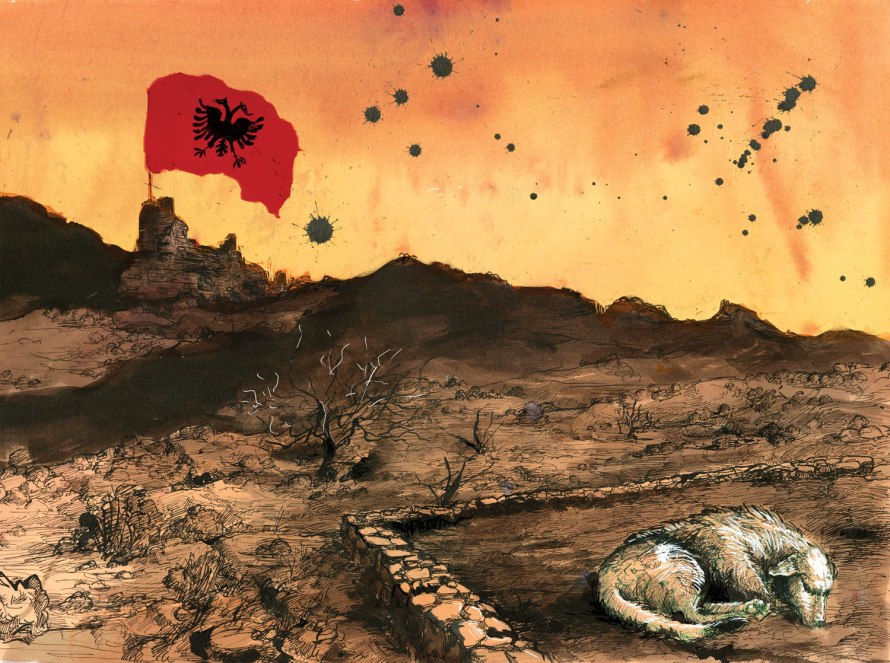
The Charter of Paris for a New Europe (also known as the Paris Charter) was signed in 1990 by 34 participating nations – including every European country except Albania. This powerful novel reveals that Albania remained a closed country, haunted by the ghosts of the past and locked in a semi-medieval culture of blood and death. Broken April is one of several novels by Ismail Kadare that has been translated from Albanian into English and its simple style and power has lost nothing when read in translation.
The novel describes the way life is lived in the high mountain plateaus of the country, where people follow an ancient Code of customary law called the kanun that has been handed down from generation to generation. The code demands men to take the law into their own hands. Insults must be avenged, family honour must be upheld – and blood must be spilt.
At the opening of Broken April, at some unspecified time in the 20th century, a young man is waiting in the dusk to avenge his older brother’s death. He adjusts the sights of his weapon, getting ready to kill his family’s enemy. The gun barrel sweeps over patches of snow toward the wild pomegranates on both sides of the road. The victim comes into view, carrying a rifle over his shoulder. The killer fires, praying silently that his bullet does not simply wound his victim. Under the code, a wound requires payment to the victim’s family; only death is free of compensation. Luckily for the killer, the bullet strikes home…
- Wider Reading – In the Land of Vendettas That Go On Forever (article in VQR by Amanda Petrusich)
- Wider Reading – Ismail Kadare: Laureate of the 2020 Neustadt Prize (World Literature today feature)
IB Learner Profile: Open-Minded
We critically appreciate our own cultures and personal histories, as well as the values and traditions of others. We seek and evaluate a range of points of view, and we are willing to grow from the experience.
Culture is a broad topic and, thanks to a process called enculturation, it is very difficult not to judge other cultures through reference to what is usual in your own culture. When reading Broken April, it is important to keep in mind this cultural bias. Try to be open minded and judge the culture in the text objectively. Of course, Kadare is trying to reveal something about Albanian culture: blood feuds, ritual revenge, and the narrowness of this patriarchal society are all criticised by Kadare. But a sharp reader will recognise the plurality of voices in his work, and be able to find the nuance in his presentation of this strange and twisted culture.
Lang and Lit Concept: Culture
Culture describes the values, goals, beliefs, convictions and attitudes that people share in society. Broken April describes a culture that may be very different to your own – or may share surprising similarities. While you’re reading this work, keep in mind the principles of internationalism that the IB is founded upon, and ask how reading literary works can give us insights into and appreciation of people in cultures that may be very different.
Chapter 1: A Death
“What have you brought me? A wound or a death?” The answer was short and dry. “A death.”
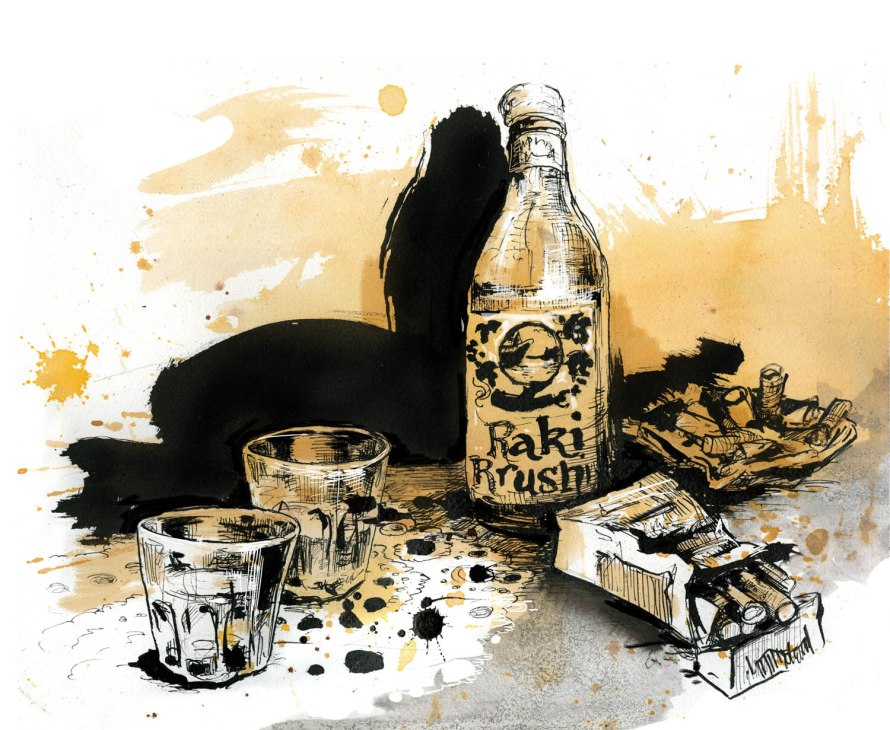
Broken April opens as Gjorg, a young man living on Albania’s High Plateau, waits to murder his neighbour. Gjorg’s family is engaged in a blood feud, a practice allowed by their laws and enshrined in an ancient Code called the kanun. As he waits for his victim, Gjorg contemplates his actions: six months previously he tried and failed to kill Zef, meaning his family had to pay a huge fine to the offended victim. As darkness falls, the gun barrel sweeps over patches of snow and the victim comes into view, carrying a rifle over his shoulder. Gjorg fires, praying silently that he makes a clean kill; only death is free of compensation. Luckily for the killer, the bullet strikes home.
The deed accomplished, the killer places the victim on his back with his rifle near his head, according to the tenets of the kanun. While the fighting and violence between the Berishas and Kryeqyes is permitted, it must be performed in a certain way. Members of both families, and all the villagers, are informed that a duty has been done. Now, the killer has thirty days in which to hide before he, too, must be hunted down. But first the Code requires the killer to attend his victim’s funeral to show respect.
Resources
- Chapter 1 Questions and Activities
- Wider Research – Blood Debt: Feudal Familial Law in the Balkans (Vice International documentary)
- Wider Reading – Ancient blood feuds cast long shadow over hopes for a modern Albania (article in Le Monde )
Learner Portfolio: Normalised Violence
In chapter 1 we are presented with an unusual and disturbing scene – the killing of one young man by another. As the chapter unfolds, we find out more about Gjorg, the killer, and the society he lives in, discovering that, in accordance with the ancient kanun Code, violence is permitted in this part of Albania.
Using evidence from chapter 1 (and elsewhere if you have read further ahead), create a mind-map, poster, spider diagram or other kind of visual aid to exp[lore and present this theme. Record how Kadare exposes the cycle of violence on the High Plateau. What are some of the some of the causes of inter-generational violence? What symbols of violence can you find in the text? What rules does the kanun lay out as to how violence is codified? What traps young men in the cycle of violence? What are the physical, emotional, and psychic consequences on the young men involved? Include plenty of quotations, present your findings to the class, and add your visual guide to your Learner Portfolio.
Chapter 2: The Blood Tax
“For hours on end he looked scornfully at the snow-covered ground, as if to say, yes, I’ll go out there to spill that bit of blood. The thought haunted him so much that sometimes he thought he really saw a small red stain take shape in the heart of that endless white.”

Gjorg travels across the rrafsh, the High Albanian plateau, towards the Kulla of Orosh in order to pay his blood tax, a payment killers are obliged to pay to the Prince upon the death of their victims. Anticipating paying the tax upon his arrival and returning back to his village the next day, he is surprised to discover several young men, all wearing the symbolic black armband of the gjaks (ritual killers) waiting to make their own payments.
A flashback of Gjorg’s great grandfather and a stranger chronicles how the blood feud started: seventy years before, a stranger had knocked at the door of the killer’s grandfather and asked for shelter. After a night’s rest, a man from the other family had killed the unknown guest because of a supposed slight in a cafe. Under the code, though, when a guest is killed before your eyes, you are bound to avenge him; so the cycle of revenge had begun.
Resources
Learner Portfolio: Wandering the High Plateau
You have learned how setting is more than just the backdrop to the novel. Aspects of setting include the physical environment: whether it is mountainous, oceanic, urban, places the characters visit, time of year, weather and so on. But setting conveys more than simple geographic information. It can represent an entire community, nation or culture, create mood or atmosphere, suggest ideas about the human concerns of the novel, and even function symbolically.
Focus on the setting and devise a Learner Portfolio task to present your ideas about various aspects of setting in the novel so far. This is a great chance for some creative work: you could sketch a map of the rrafsh, including locations such as the site of Zef’s murder; Brezhtoft, the inn where Gjorg stays; and the Castle of Orosh. Annotate your map with explainers and snippets from the story. Alternatively, you could create a mind-map or spider diagram, or even turn a scene or two into a graphic novel.
.
Chapter 3: Visitors to the High Plateau
“Diana, her face pressed to the window, delighted, could not take her eyes from the costumes of the women. How beautiful, Lord, how beautiful, she repeated to herself, while, leaning against her, Bessian recited in a caressing voice the clauses of the Code dealing with the krushks.“
This chapter introduces a second set of characters into the story: Diana and Bessian, a young couple on their honeymoon have come to study the age-old customs, including the blood feud, of the people living in these mountains. To the bride, the habit of obligatory murder is repugnant. The story takes a personal turn when Diana glimpses Gjorg waiting for his month-long truce to end, and with it his life. For a brief time, the destinies of the killer and the honeymooners intersect.
Resources
Learner Portfolio: The Vorpsi’s Marriage

Bessian and Diana are newlyweds touring the High Plateau for their honeymoon. But right from the first moment they are introduced, they seem to be an odd match. Diana seems like a warm, emotional person who naturally empathises with others. Bessian seems colder, more academic and condescending to others – even his new wife. By the end of chapter 3, they have reached the Kulla of Orosh where they dine with the Prince and stay the night in a resplendent suite of rooms. But it would be fair to say that the honeymoon is not going quite as Bessian might have planned. Something seems to have changed in Diana – but Bessian’s previous confidence has been shaken as well.
Create a twin character profile of the Vorpsis. Annotate your profile with notes about each character and the circumstances of their marriage. Do you think they are a good – or bad – match? What do you think will happen to their marriage later in the story – or after the novel ends?
Chapter 4: Steward of the Blood
“This was the blood book. For some time he leafed through the stout pages filled with dense script in double column. His eyes took in nothing, merely skimming coldly the thousands of names, whose syllables were as alike as the pebbles of an endless beach.”
Once again, the point of view shifts and we see the world from behind the eyes of Mark Ukacierra, Steward of the Blood. Mark spends this chapter considering the events of the night before – the meal between the Prince and his guests (Bessian and Diana) – and his attitude towards these unwelcome arrivals. Through Mark’s thoughts we learn more about the way the Kanun is administered, and its impact on the people, both high and low, of this remote mountain kingdom.
Unlike the other main characters, Mark is a devout believer in the kanun, so much so that he wishes to destroy writings that speak against it: “If it were up to Mark Ukacierra, he would have burnt those books long ago.” His perspective prevents the novel from becoming too one-sided and presents a positive view instead. Mark doesn’t factor into the larger plot of the story, but he adds to the discussion and makes Kadare’s world richer and more complex.
Resources
- Chapter 4 Questions and Activities
- Wider Reading – The Albanian Kanun in Kadare’s Broken April by Sean Guynes
Learner Portfolio: The Two Sides of Mark Ukacierrra
Described by Bessian and Diana as ‘repulsive’, chapter 4 takes us into the mind of Mark Ukacierra. During the time the novel focuses on him, Mark shows himself to be a devout follower of the kanun. He detests Bessian and Diana, outsiders to the culture he prizes so deeply, venerates the High Plateau, and denigrates the city. With his conservative worldview, Mark contrasts with Diana who thinks his way of life is horrendously violent and outdated.
But Mark is not just a caricature. Despite his devotion to the kanun, he brings complexity into the story by (knowingly or unknowingly) acknowledging certain shortcomings and deficiencies. When worrying about the decline of the kanun, he has secret thoughts that he dares not reveal to anybody. When it is revealed that Mark, too, suffers blood sickness, might it be possible to even feel a touch of sympathy? Maybe not – but this certainly adds a new dimension to his character.
Create a character profile of Mark Ukacierra which reveals some of this complexity and includes the idea that, while he doesn’t feature in the plot, nevertheless his chapter is a vital part of understanding how the kanun’s cruelty affects everyone on the High Plateau – even those who think they are preventing it from fading into obscurity.
Chapter 5: Spring
“Don’t forget… your truce is over on the seventeenth of April.”
The narrative returns to Gjorg, who has made it back to his village where he sees a mourane (small tombstone) for Zef, the man he killed. Gjorg is saddened by the grave as he realises that this is what will be left of his own life once his killer seeks him out. He knows that, as the last days of March and April pass, he will either be dead or trapped inside a tower of refuge. Gjorg contemplates running away, but the shame would be too much to bear and he decides instead to spend the rest of his bessa wandering the High Plateau.
Gjorg visits several inns, where he frequently overhears men talking about Diana. He remembers the serenity his previous encounter with her provoked and longs to see her once more. Eager for more news of her carriage, he roams from place to place. Days pass. Diana must be somewhere on the plateau, but time is running out to find her…
Resources
- Chapter 5 Discussion and Activities
- Albania’s Blood Feud Children Living with Death Sentences (short Journeyman documentary)
Learner Portfolio: Women’s Liberation
Stunningly beautiful, Diana is a city-dweller from Tirana. Diana has just married Bessian Vorpsi, an egotistical writer, and he takes her on a tour of the High Plateau for their honeymoon. As they journey around, men ogle Diana, revealing the objectification of women is prevalent in this culture. As word spreads, she becomes a hot topic and is spoken about in misogynistic terms: Gjorg overhears strangers describing Diana in derogatory and crude ways – so much so that Gjorg fantasizes about killing everyone in the inn! Later, Gjorg speaks to a man riding an ox who says: “that woman was beautiful as a fairy. Her eyes pierced you through and through.”
Taking this idea as a starting point, show how the character of Diana reveals women’s rights and freedoms in society. You might consider: her marriage to Bessian; her reception in the Castle of Orosh; the way she is described by people on the rrafsh; her entry into the Tower of Refuge; what happens to Diana at the end of the novel.
Chapters 6 and 7: Broken April
As the novel reaches its conclusion, tension begins to mount between Bessian and Diana. Profoundly moved and disturbed by her journey to the High Plateau – and especially her encounter with Gjorg – Diana draws further and further away from Bessian. On his part, for all his learning there are some things he still doesn’t know, and he finds himself unable to break through Diana’s increasingly icy demeanour.
The final chapter returns to Gjorg’s perspective, bringing the novel full circle. As the time of his bessa runs short his thoughts become increasingly frantic. The scenery takes on a sinister atmosphere at the end of the novel, as any dark shape on the horizon could herald the approach of a vengeful member of the Kryeqye family – and death could strike at any moment.
Resources
- Chapters 6 and 7 Discussion and Activities
- Wider Reading – Living with Ghosts (Interview with Ismail Kadare)
- Sisters of the Blood Feud: Revenge Killings in Albania (Witness documentary)
Learner Portfolio: Practise for Paper 1 (Literature students only)
If you are a Language A: Literature student, at the end of your course you will sit Paper 1: Guided Literary Analysis. This paper contains two previously unseen literary passages. SL students write a guided analysis of one of these passages; HL students write about both passages. The passages could be taken from any of four literary forms: prose, poetry, drama or literary non-fiction. Each of the passages will be from a different literary form.
Here is a small selection of passages taken from Broken April for you to practise your textual analysis annotation and planning skills; as this is a novel the literary form is ‘prose’. Each passage is accompanied by a guiding question to provide a focus or ‘way in’ to your response. Choose one passage and complete this Learner Portfolio entry in the style of Paper 1: Guided Literary Analysis. Begin by marking up the passage with detailed annotations, then see if you can organise your observations into a written response.
Learner Portfolio: Practise for Paper 2
Write this Learner Portfolio in the style of a practice Paper 2 response. You can use one of the prompts below, or another prompt given to you by your teacher. Although Paper 2 requires you to compare-and-contrast two literary works, for the sake of this exercise you could focus only on your response to Broken April . Choose one of the following prompts (or another prompt you have been given), talk with your teacher about how to approach and structure your writing, then complete your portfolio entry (visit this post for more help with Paper 2):
- The time and place where a literary work is set are of crucial importance to understanding the work as a whole. Discuss with reference to the literary works you have studied.
- Characters can have an ‘inner’ life and a ‘public’ life. To what extent is this true of characters in literary works you have studied?
- Discuss the means as well as the effectiveness with which power and authority is exercised in the literary works you have studied.
- Referring to literary works you have studied, discuss both how and why the text invites the reader to identify with characters and the situations they are in?
Towards Assessment: Individual Oral
Supported by an extract from one non-literary text and one from a literary work (or two literary works if you are following the Literature-only course)students will offer a prepared response of 10 minutes, followed by 5 minutes of questions by the teacher, to the following prompt: Examine the ways in which the global issue of your choice is presented through the content and form of two of the texts that you have studied. (40 marks)
Broken April would be a good choice to discuss in this oral assessment. Once you have finished reading and studying Kadare’s work, spend a lesson working with the IB Fields of Inquiry: mind-map the novel, come up with ideas for Global Issues, make connections with other Literary Works or Body of Works that you have studied on your course and see if you can make a proposal you might use to write your Individual Oral. Here are one or two suggestions to get you started, but consider your own programme of study before you make any firm decisions about your personal Global Issue. Whatever you choose, remember a Global Issue must have local relevance, wide impact and be trans-national:
Literary pairing
Body of work Pairing
- Field of Inquiry: Beliefs, Values and Education
- Global Issue: the effectiveness of propaganda to win hearts and minds
- Rationale:
In Broken April, Kadare shows how propaganda captures loyalty by glorifying the Kanun and its blood‑feud tradition. People are persuaded to believe that a violent system is in fact honourable and sacred… even when it brings such suffering to families. A work originally written in English which presents a modern form of propaganda is Glengarry Glen Ross by David Mamet. The manipulative sales tactics of the real estate agents convinces clients to purchase worthless land – and Mamet goes further implying that the entire capitalist system has won over not only the men’s clients, but the salesmen themselves. A different work which would be equally useful in this activity is Nothing to Envy by Barbara Demick.
- Field of Inquiry: Culture, Community and Identity
- Global Issue: the slow and difficult journey to positive social change
- Rationale:
Kadare portrays the slow and difficult path to social change through the rigid Kanun code, which traps generations in endless cycles of revenge even when many characters recognise its cruelty and outdated logic. A small-but-important character is the Prince of Orosh, who seems tired of such an outdated culture. Yet entrenched attitudes to Diana’s presence in his castle shows that any change is going to be slow and difficult. A body of work that suggests the same issue is eL Seed’s calligraffiti. His large‑scale artworks are often placed on buildings or in communities marked by misunderstanding or division. He uses vibrant colours and Arabic script to promote peace and inter-cultural dialogue; but the environment in which his art is placed shows social change is not going to happen quickly.
Towards Assessment: Higher Level Essay
Students submit an essay on one non-literary text or a collection of non-literary texts by one same author, or a literary text or work studied during the course. The essay must be 1,200-1,500 words in length. (20 marks).
Kadare wrote this novel to illuminate aspects of Albanian society that were still governed by the customary code called the Kanun. Much of the novel is concerned with exploring the impact of the Kanun on communities and individuals caught up in its murderous cycles of vengeance and blood. If you would like to write your HL Essay on this text, you could examine the role of the Kanun in traditional Albanian culture and society. You might consider the idea of anachronism, where certain traditional rituals from the past are still practiced in the present day. One of the great achievements of Kadare’s novel is revealing the truth about the Kanun to an international audience. Here are one or two examples of lines of inquiry suitable for this text – but remember to follow your own interests and the direction of your own class discussion to generate your own line of inquiry. It is not appropriate for students to submit responses to an essay question that has been assigned:
- How does the character of Diana Vorpsis reveal the extent to which women are liberated in Broken April by Ismail Kadare?
- How does Kadare use dark images and motifs of coldness to further his criticism of authoritarian culture in his novel Broken April?
Please use this successful Higher Level Essay to see the kind of work you can produce and the way a literary essay of this scope can be constructed. You can discuss the strengths of this piece to help you improve your own writing. Be mindful of academic honesty when writing your own essay. To avoid plagiarism do not copy any part of this essay; select a different line of inquiry or focus point; develop an original thesis; submit a bibliography and cite this essay as a source.
Categories:Prose
 IB Language and Literature 3.0
This is great! Thank you for sharing!
LikeLike
“Wow, this is fantastic! I love how easy it is to navigate and the thoughtful content you’ve shared. It’s clear a lot of hard work went into this. Great job!”
LikeLike