Category: Prose

Prose Study: Play It As It Lays by Joan Didion

Play It As It Lays is Joan Didion’s second novel and one of her most famous. Named in TIME’s 100 Best Books (1923 – 2005) it was adapted into a film by Didion and her husband, John Gregory Dunne. The book itself is brisk, 200 pages long but divided into 80 short chapters, some of which are only a few sentences each. Her energetic style, and focus on using dialogue to tell the story, creates an episodic, fast-paced narrative that is the perfect framing for the quintessential Hollywood novel.

Prose Study: No Longer Human by Osamu Dazai

No Longer Human is the most famous of author Osamu Dezai’s (pen name of Shuji Tsushima, or 太宰治 in Japanese) few works. Written in 1948, it was first published in Japan under the name Disqualified From Being Human. Dezai’s book deals with themes of mental illness, depression, alienation, abuse, addiction, and suicide, seeming to uncover all of humanity’s darkest inclinations and tragedies.

Prose Study: A Thousand Years of Good Prayers by Yiyun Li

The debut collection of writer Yiyun Li (李翊雲 in Chinese), A Thousand Years of Good Prayer was published in 2005 and explores the lives, marriages, past loves, beliefs, and struggles of people caught between eastern and western cultures. From the hustle and bustle of Beijing, to the bleak and barren steppes of Inner Mongolia, to a tiny restaurant in Chicago, Yiyun Li’s stories take readers to places strange and familiar, comfortable and bewildering. Her characters are Chinese and Chinese Americans, immigrants and their families, all caught between countries and cultures, and having to adapt from communism to capitalism.

Non-Fiction Study: Fun Home by Alison Bechdel

Fun Home is a graphic novel recounting the story of Alison Bechdel coming out as a lesbian. Told in non-chronological flashbacks to her childhood in Beech Creek, the story works through her difficult childhood relationship with her father, Bruce, and her gradual discovery that he, too, harboured secrets from Bechdel, her mother and siblings.

Non-Fiction Prose Study: Nothing to Envy by Barbara Demick

The timeline of Nothing to Envy charts the lead-up to the devastating North Korean famine (euphemistically called The Arduous March in the DPRK), a period of mass starvation that lasted from 1994 – 1999 in which between 2 and 3.5 million North Koreans lost their lives. As money and jobs dried up in the years before the famine, people started to fear the worst. Even the government regime, so reluctant to accept anything might be wrong in their workers’ paradise, instigated a propaganda campaign exhorting people to eat less food. Not that the people had much choice. By the mid-1990s, the countryside was stripped bare and mothers resorted to making soups out of grass, and porridge out of tree bark, rice husk and sawdust.

Prose Study: Balzac and the Little Chinese Seamstress by Dai Sijie

The story of Balzac and the Little Chinese Seamstress opens as the narrator (who remains unnamed) and his best friend Luo arrive at the Phoenix of the Sky village in the Chinese province of Sichuan near the border with Tibet. The year is 1971 and Mao Zedong, Chairman of the People’s Republic of China, is conducting a policy of ‘re-education’ whereby young men of middle-class families are sent to the countryside to learn from poor peasants how to be model citizens. The two boys are tasked with menial and back-breaking work, such as coal mining and carrying buckets of faeces up the mountain to fertilize the rice fields.

Prose Study: Waiting for the Barbarians by J.M. Coetzee

An unnamed magistrate is stationed at a frontier border town of an expanding empire. He’s been posted here for a long time and, despite how far away he is from the capital, he is happy to live out his ‘easy years’ in this remote area on the border of the empire; approaching sixty, he will retire soon and, apart from the occasional sheep raids and sporadic attacks, his posting is not at all dramatic. However, rumour is spreading about a possible barbarian attack by the indigenous peoples who live on the empire’s fringes. Displaced by the foreign settlers, are they now massing together to counter-attack?

Prose Study: The Vegetarian by Han Kang

Han Kang’s The Vegetarian is one of the most internationally well-known Korean novels. It is not a story about a vegetarian per se; rather, it is a work that investigates what constitutes suffering. It tells the story of Yeong-hye as related through the eyes of three members of her family: her husband, her brother-in-law, and her sister In-hye. The story begins when Yeong-hye, seemingly from out of the blue, tells her husband she will no longer eat meat and proceeds to throw all the meat in their house away.

Prose Study: The Elephant Vanishes by Haruki Murakami

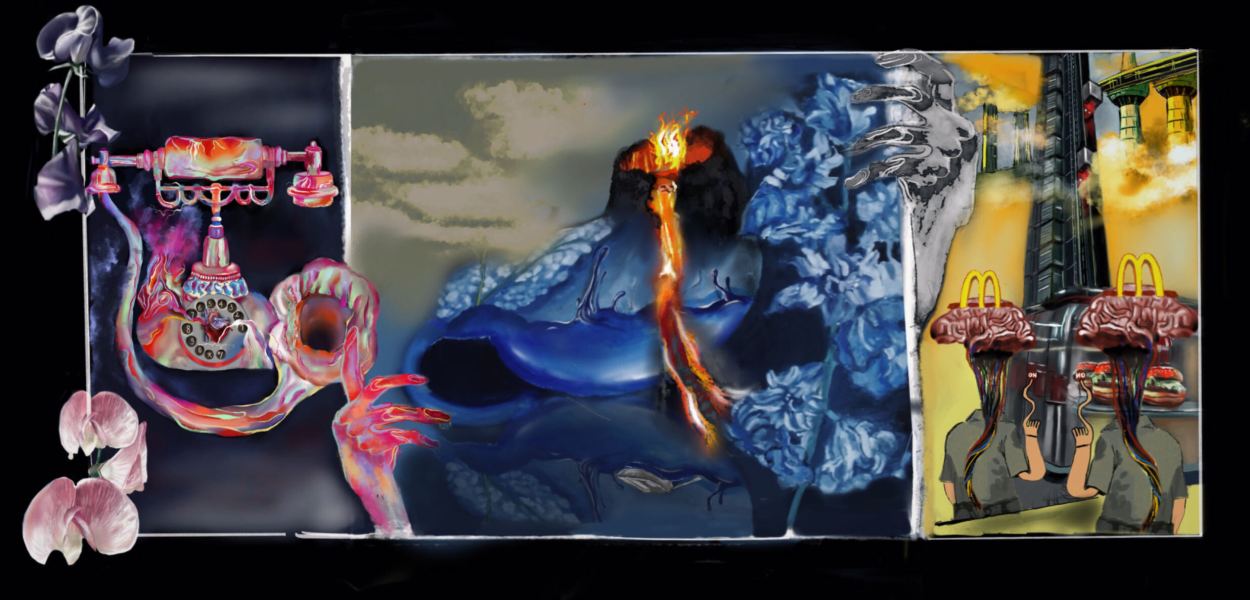
In these stories, a man sees his favourite elephant vanish overnight; a newlywed couple suffers attacks of hunger that drive them to hold up a McDonald’s; and a young woman discovers a little green monster who burrows up through her backyard and can read her thoughts. You never know what is going to happen in one of Murakami’s stories – or even which reality you’re going to find yourself lost inside.

Prose Study: Broken April by Ismail Kadare

The novel describes the way life is lived in the high mountain plateaus of Albania, where people follow an ancient code of customary law called the Kanun that has been handed down from generation to generation. The code demands men to take the law into their own hands. Insults must be avenged, family honour must be upheld – and blood must be spilt.