Category: Paper 1 Analysis

Uniqlo Selfless Selfie

This particular text and guiding question was set by the IB as a specimen paper when the Lang and Lit curriculum was revised in 2019, so it’s a good one to have a go at. It continues a long tradition of presenting advertisement texts for analysis in Paper 1. Ads are great multimodal texts with strong visuals as well as plenty of persuasive copy and tricky linguistic devices for you to unpick. My top tip: you might like to focus on visuals – but don’t ignore the copy, as analysing language claims and explaining the relationship between image and text can elevate your analysis from good to great.

Magical Thinking

The purpose of Language A: Literature Paper 1 is for you to write a Guided Literary Analysis to a passage taken from any one of four major literary genres: prose fiction, poetry, drama, prose non-fiction. You have one hour and fifteen minutes to create your response (or two hours and 15 minute for HL students to complete two responses). Therefore, it’s not meant to be a comprehensive, line-by-line analysis; you simply don’t have time to write about every single idea and feature in the given text. ‘Guided’ means that you are provided with a question that gives you a focus for your writing and I highly recommend that you use this question to help you plan a response of reasonable length that you can produce in the time available to you. That’s not to say that you should limit yourself or write dogmatically. The response below demonstrates how, if you begin with a focus on the terms of the question, later in your answer you can include other relevant observations.

Beauty in the Eye of the Beholder

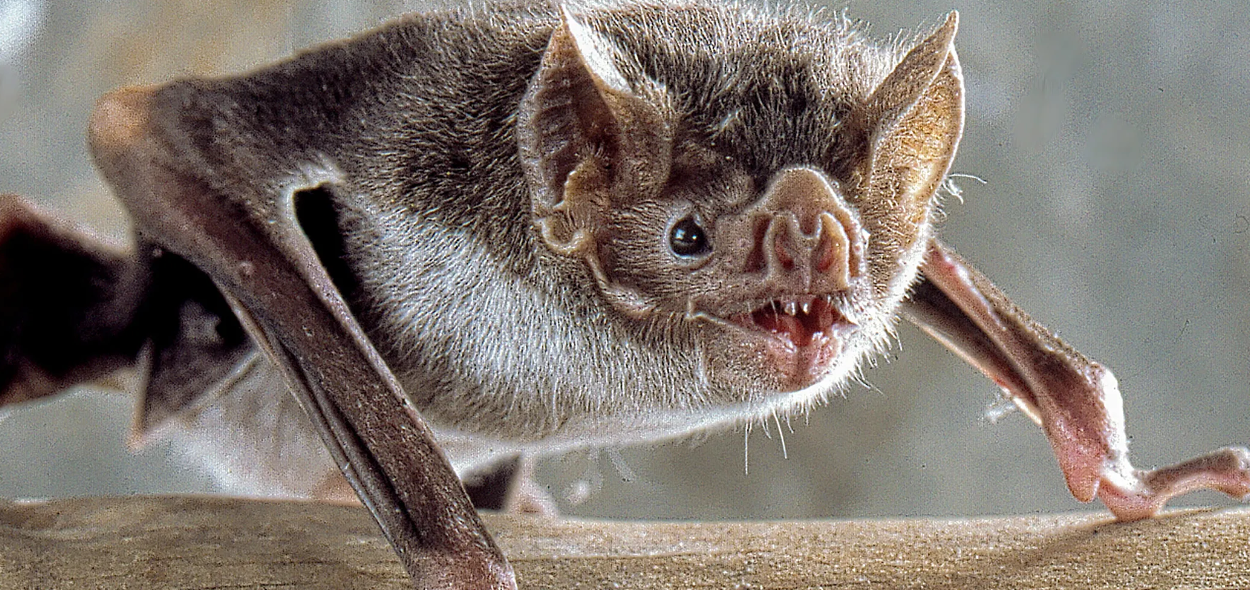
Ruth Pitter’s poetry can sometimes be interpreted in light of her religious faith; after the Second World War Pitter experienced a religious awakening. That’s definitely a theme in this poem, which tells of an encounter with a seemingly insignificant animal – a tiny bat. As an unseen textual analysis, it’s not expected that you’ll have any knowledge at all of the poem or poet, but that won’t stop you from sensing the religious undertone to this poem, particularly in the demonic diction and imagery of the opening verse or two. Read through the poem and the sample response underneath to see how you might integrate this understanding into a complete answer. And, if you don’t think you would have noticed the religious allegory, don’t worry – there’s more than one way to skin a cat (or a bat)!

Children Playing

According to the IB Subject Guide for Language and Literature, of the two texts presented to you in your Paper 1 examination, one will be predominately verbal (meaning it will have comparatively more text) and one will be visual in nature (meaning the image or images will dominate). If you are an SL student you will have a choice and, while you shouldn’t go into the exam determined to consider only one type of text, you can follow your own strengths in regard to your choice of which text to analyse. HL students will have to analyse both, which reflects the greater amount of class time you are given to explore and learn various text types. In this sample, the text is one single image, which is a common way for satirical cartoonists to present their work. Take some time to work on this text yourself, then read the sample answer below for an idea of how you might analyse this kind of text.

You Have a Question, Calvin?

Comic strips are a popular text type to read and study and may also appear on Paper 1. By this stage in your education, your use of language is quite developed, and it may be hard for teachers to help you too much with your use of language (according to criteria D, 5 of your marks for this paper are available for the way you use language). However, one way to boost your mark in criteria D is to use the correct terminology in relation to the text type. In this response you can find the words ‘panel’, ’emanata’, ‘speech bubble’, ‘negative space’ and ‘punchline’. Of course, identifying these features correctly is only the start; commenting on the effect of features you see will help you score in criteria B as well.

Those Cats are Good

Tone can be one of the hardest elements of a written text to interpret: a spoken interview would include inflection, pace, emphasis, even body language and eye contact, all clues that can help you hear the speaker’s tone. But in your exam you’ll be given a printed text, so you’ll have to use your mind’s ear and inference skills to ascertain a speaker’s tone of voice, should this be relevant to the extract. Read through the text for yourself, and keep track of how you respond to tone. What words will you use: Confident? Nonchalant? Humble? Arrogant? Zealous? Kind? All these words – and more – could be useful in a response to this text. While the interpretation and evaluation below is entirely convincing, remember that there is more than one way to skin a cat. This is especially true when the text is as rich and linguistically interesting as this interview.

Politically Correct Language

One of the most difficult – but often the most crucial – elements of a text to analyse and understand is tone of voice. When listening to a speaker speak, tone can be conveyed in a variety of ways; voice inflection, emphasis, pace, volume, body language and more. When reading words on a page, you can’t hear the writer’s tone of voice. Nevertheless, tone is integral to meaning, so you need to be able to make good inferences. Practicing by reading opinion columns is a good way to attune your ear to the subtleties of tone. Opinion columns can be challenging or conciliatory, strident or nuanced, forceful or subtle, assertive or balanced. Sometimes a writer might use sarcasm or irony to make a point – misunderstand this and you will misunderstand the entire meaning of a text. Take a look at this article, about the contentious topic of political correctness, and identify areas where you believe the writer’s tone is particularly clear.

Fern Foray

Travel writing is a rich and varied category of writing with fluid genre boundaries. Extracts could range from an informative guidebook entry, to an online review advising people whether or not to take a particular trip, to a descriptive passage helping you visualise a faraway place, or an advert persuading you to sign up to a tour… and these are just a few of the possibilities that spring to mind. The extract below is a piece of travel writing in the form of a journal or diary. One of the challenges of being given such a rich passage is deciding what to write about – remember, after you plan you’ll only have an hour or so to write your analysis. Before you read the sample response, first work with the text and guiding question. Plan a series of points that you would want to develop into your own answer. Then read the response that follows. Which points would you also have written about?

Disappearing Bees

In recent years, the category of general interest scientific writing has exploded in both quality and quantity. Fuelled by charismatic scientists – who also happen to be great speakers and writers – such as Michio Kaku, Brian Cox and Sabine Hossenfelder, and crossing media from books to television documentaries to podcasts, blogs, vlogs and video lectures, this genre actually has a long and distinguished history (think about how many years David Attenborough and Jane Goodall have been writing and presenting, and how many people have read Charles Darwin or Stephen Hawkings’ famous books). A short search on the internet turns up several possible sources of articles such as today’s: New Scientist Magazine; Nature; Cosmos; National Geographic; Scientific American – and many more. Not surprisingly, these publications have been the source of many texts in Paper 1. While they may be initially befuddling, after you read a few articles patterns start to emerge. Today’s response was written by Meagan Finocchiaro after exploring this genre as part of her Paper 1 preparation. She began to notice a pattern: many articles were built around a narrative framework, with elements such as setting the scene, flashback, dramatic tension – and even character types such as protagonists and antagonists.

Telling the Time

This text was provided by the IB as an example of what kind of writing to expect in Paper 1, so it’s worth paying attention to. In the past, there have been several examples of something you might call ‘general interest scientific writing,’ whether the journey of a water molecule through the universe, an investigation into declining bee populations, or an article about robotics and artificial intelligence. You shouldn’t be worried about needing any specialist knowledge to understand these texts – remember, Paper 1 is primarily a language analysis exercise. As such, you should be more concerned with the formal and stylistic features of the text than having to understand esoteric concepts. After you’ve practiced once or twice with texts like this, you’ll also realise that this kind of scientific writing is carefully balanced. Of course, it has an inherent appeal to people interested in and knowledgable about science. But casual readers can follow these texts too: the authors often explain ideas clearly, use comparisons to help you visualise, and employ technical language carefully.