Author Archives

Unknown's avatar

Doug

Poetry Study: Night Sky With Exit Wounds by Ocean Vuong

While regular readers of poetry know better than to equate a poem’s speaker with the author, in Vuong’s case, his poems are personal and confessional, exploring his family’s history, journey to America, his adolescence, his experience of being a young gay man in a homophobic environment, and his formative years as a writer. His fractured family history looms large over the collection which explores themes of maternal support, paternal abandonment, the effects of generational trauma, and of migration as a consequence of war. Vuong’s collection goes back in time to the fall of Saigon, and forward to the future (at one point Vuong addresses an imaginary son he’s yet to have), all the while using his profound imagination to fill the gaps and answer the questions of his life.

What’s Wrong With McDonalds?

I was given this leaflet by a colleague many years ago, and I’ve always found it to be a great practice text. True, it’s unlikely that the texts selected for Paper 1 nowadays would be as dense as this leaflet. But that’s what makes it a good text for training. It’s impossible to cover all the points and methods used by the writers in a single sitting, so you have to make clear choices about what you are going to focus on analysing and the evidence you will include in your response. Will you use the tried and tested ethos-pathos-logos route? Will you focus on heading, image, subheading, copy? Will you try to separate out the various attack strategies employed in the leaflet? The response below was written by Enrico Merisi in DP1 as a practice for his end of year exams. What I like about Enrico’s answer is the way he links his paragraphs together using the theme of ‘duplicity’ and carefully chooses only the parts of the text that support his main ideas.

Prose Study: No Longer Human by Osamu Dazai

No Longer Human is the most famous of author Osamu Dezai’s (pen name of Shuji Tsushima, or 太宰治 in Japanese) few works. Written in 1948, it was first published in Japan under the name Disqualified From Being Human. Dezai’s book deals with themes of mental illness, depression, alienation, abuse, addiction, and suicide, seeming to uncover all of humanity’s darkest inclinations and tragedies.

Drama Study: Top Girls by Caryl Churchill

Mixing fantasy and reality, using a nonlinear construction, and featuring overlapping dialogue as women speak across, on top of, and around one another, Top Girls is both unique and difficult. Beginning with a surreal, imaginary dinner party scene that celebrates the promotion of Marlene to managing director of Top Girls Employment Agency, Churchill asks questions about what it takes for a woman to be successful, and to what extent 20th century Feminism has equaled out historical injustices for women.

A Call for Unity

Last week would have been the 95th birthday of Reverend Martin Luthor King Jr which, this year, happily coincided with Martin Luthor King Day, always marked on the third Monday of January. As part of our course on rhetoric and persuasion, students worked with King’s famous ‘I Have a Dream’ speech to improve their skills of analysis and hear those rhetorical techniques put into action by a master of his craft. Some 100 years after President Abraham Lincoln signed the Emancipation Proclamation freeing the slaves, a young church pastor climbed the steps of the Lincoln Memorial in Washington, D.C. to describe his vision of America. More than 200,000 people – black and white – came to listen. While it’s highly unlikely you’ll get such a well-known and instantly recognisable speech as a text in Paper 1, that doesn’t stop you practicing with familiar words and phrases. So this is what we did…

An American Revolution

Advertisements are a great text type on which to practice your Paper 1 analysis skills. Most ads are multimodal, so you can practice writing about both images and text. When looking at advert images, try to break down the image into ‘chunks’. Begin with the main meaning-making image. In the advert below, that’s the car. Then look at how other elements of the advert, such as symbols, colour scheme, or compositional features, support the central message.

Uniqlo Selfless Selfie

This particular text and guiding question was set by the IB as a specimen paper when the Lang and Lit curriculum was revised in 2019, so it’s a good one to have a go at. It continues a long tradition of presenting advertisement texts for analysis in Paper 1. Ads are great multimodal texts with strong visuals as well as plenty of persuasive copy and tricky linguistic devices for you to unpick. My top tip: you might like to focus on visuals – but don’t ignore the copy, as analysing language claims and explaining the relationship between image and text can elevate your analysis from good to great.

Prose Study: A Thousand Years of Good Prayers by Yiyun Li

The debut collection of writer Yiyun Li (李翊雲 in Chinese), A Thousand Years of Good Prayer was published in 2005 and explores the lives, marriages, past loves, beliefs, and struggles of people caught between eastern and western cultures. From the hustle and bustle of Beijing, to the bleak and barren steppes of Inner Mongolia, to a tiny restaurant in Chicago, Yiyun Li’s stories take readers to places strange and familiar, comfortable and bewildering. Her characters are Chinese and Chinese Americans, immigrants and their families, all caught between countries and cultures, and having to adapt from communism to capitalism.

Magical Thinking

The purpose of Language A: Literature Paper 1 is for you to write a Guided Literary Analysis to a passage taken from any one of four major literary genres: prose fiction, poetry, drama, prose non-fiction. You have one hour and fifteen minutes to create your response (or two hours and 15 minute for HL students to complete two responses). Therefore, it’s not meant to be a comprehensive, line-by-line analysis; you simply don’t have time to write about every single idea and feature in the given text. ‘Guided’ means that you are provided with a question that gives you a focus for your writing and I highly recommend that you use this question to help you plan a response of reasonable length that you can produce in the time available to you. That’s not to say that you should limit yourself or write dogmatically. The response below demonstrates how, if you begin with a focus on the terms of the question, later in your answer you can include other relevant observations.

Beauty in the Eye of the Beholder

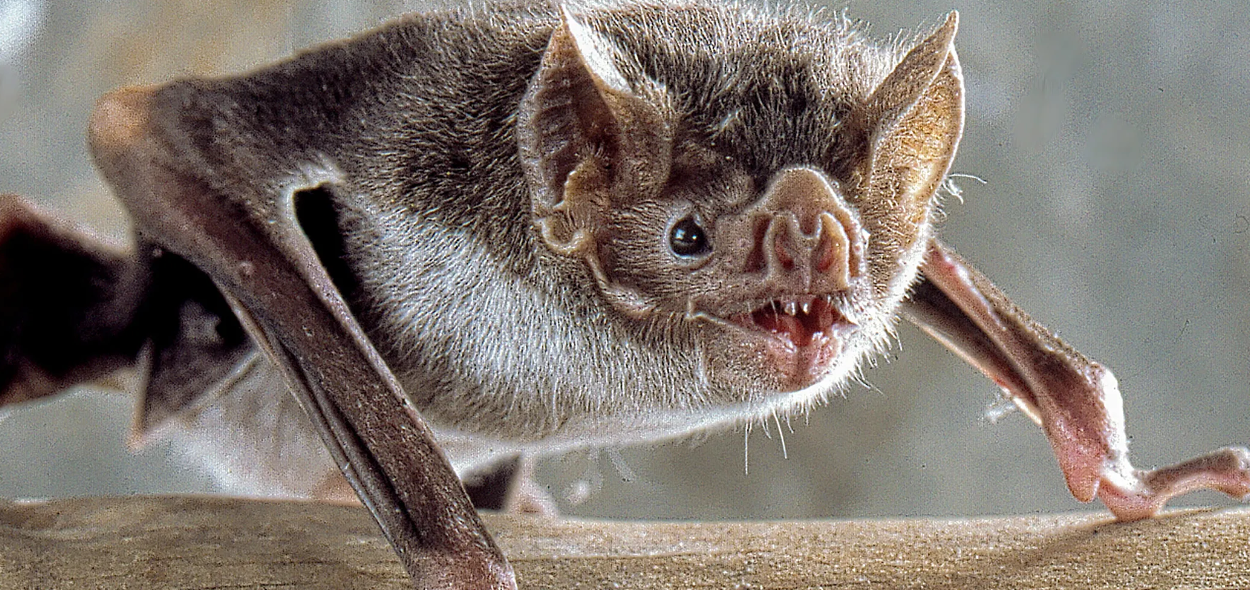
Ruth Pitter’s poetry can sometimes be interpreted in light of her religious faith; after the Second World War Pitter experienced a religious awakening. That’s definitely a theme in this poem, which tells of an encounter with a seemingly insignificant animal – a tiny bat. As an unseen textual analysis, it’s not expected that you’ll have any knowledge at all of the poem or poet, but that won’t stop you from sensing the religious undertone to this poem, particularly in the demonic diction and imagery of the opening verse or two. Read through the poem and the sample response underneath to see how you might integrate this understanding into a complete answer. And, if you don’t think you would have noticed the religious allegory, don’t worry – there’s more than one way to skin a cat (or a bat)!